


 Multimedia
08
April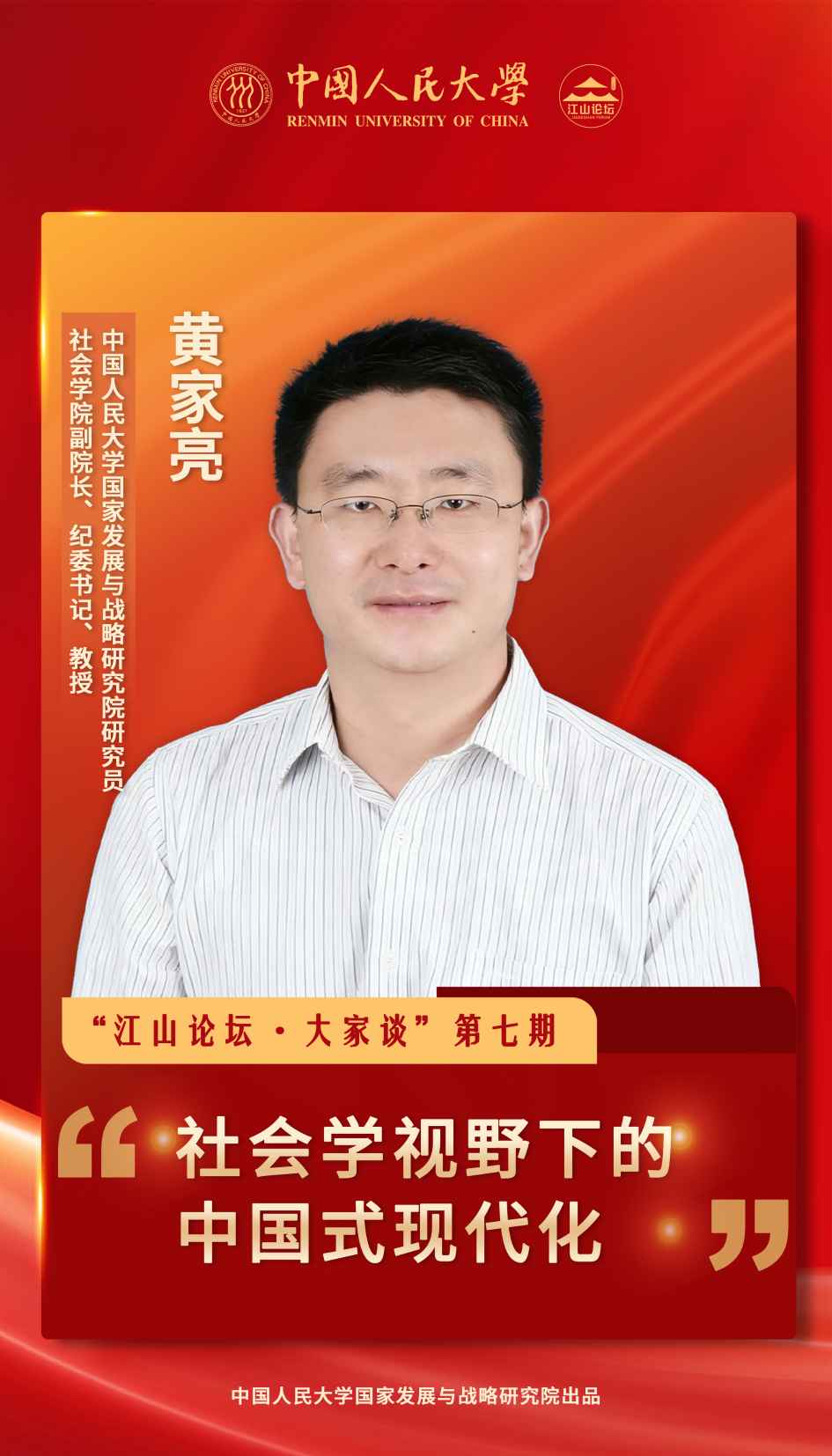
Social change and modernization are among the most central and classic topics in sociological research. The practice of Chinese modernization has greatly enriched the theoretical connotations of modernization. From a sociological perspective, the fundamental task in advancing Chinese modernization is to properly handle four types of relationships:
First is the relationship between tradition and modernity. Modernization refers to the process by which a society transforms from traditional to modern, a positive and progressive process of social change. All social change occurs on the basis of existing conditions. Chinese modernization must break away from and transcend tradition, responding to and leading the changes of the times; otherwise, modernization cannot even begin. At the same time, it must be rooted in tradition, drawing upon and developing it in combination with the fine traditional Chinese culture; otherwise, it would become a “rootless modernization” and lack sustainability.
Second is the relationship between China and Western Countries. Modernization first emerged in western countries, but it is not equivalent to Westernization. Changes at the societal level follow certain general patterns, yet they are never linear, nor can they be simple replicas of any regional model. Chinese modernization must both adhere to the general laws of modernization and be grounded in China’s national conditions. China is a vast society, and the most fundamental reality it faces is its enormous population size. As a socialist country, achieving common prosperity for all people and coordinating material and spiritual civilization are essential goals. The traditional Chinese idea of harmony between humanity and nature, along with the pursuit of a new form of modernity, necessarily emphasizes harmonious coexistence between humans and nature. China’s cultural inclination toward peace, as well as its status as a late-developing country, determines that it must follow a path of peaceful development. Therefore, Chinese modernization is based on China’s own national conditions while drawing on the experiences of other countries; it inherits historical culture while integrating modern civilization; it benefits the Chinese people while also promoting common development for the world.
Third is the relationship between efficiency and equity. The process of Chinese modernization is a catch-up type of social transformation. It is an inevitable choice to achieve breakthroughs in certain sectors, regions, and groups, allowing some to develop first. However, the pursuit of fairness and justice, and the goal of common prosperity for all people, remain our enduring values. Therefore, by deeply implementing strategies such as coordinated regional development, major regional strategies, and rural revitalization, efforts must be made to continuously narrow regional, urban–rural, and income gaps, enhance the balance, coordination, and inclusiveness of development, and ensure that the fruits of modernization benefit all people.
Fourth is the relationship between order and vitality. Sociology pays close attention to social order and social vitality. Historical and contemporary experience shows that these two often form a difficult tension that must be properly managed; otherwise, society may fall into a vicious cycle where excessive control stifles dynamism, while excessive looseness leads to disorder. The key to balancing order and vitality lies in properly coordinating the roles of the state, the market, and society. These actors should form a relationship of positive cooperation, neither absent nor overreaching, but instead complementing one another.
In conclusion, Chinese modernization is a great practice unfolding in a mega-scale society, characterized by the coexistence of civilizational continuity and institutional innovation. It is an unprecedented feat in the history of human civilization. Only by continuously reflecting on and adjusting the four major relationships, between tradition and modernity, China and western countries, efficiency and equity, and order and vitality, can Chinese modernization be ensured to advance steadily along the correct path.
Translator: ZHANG Yuqing
Web Editor: ZHANG Jingjing