


 Research Update
10
April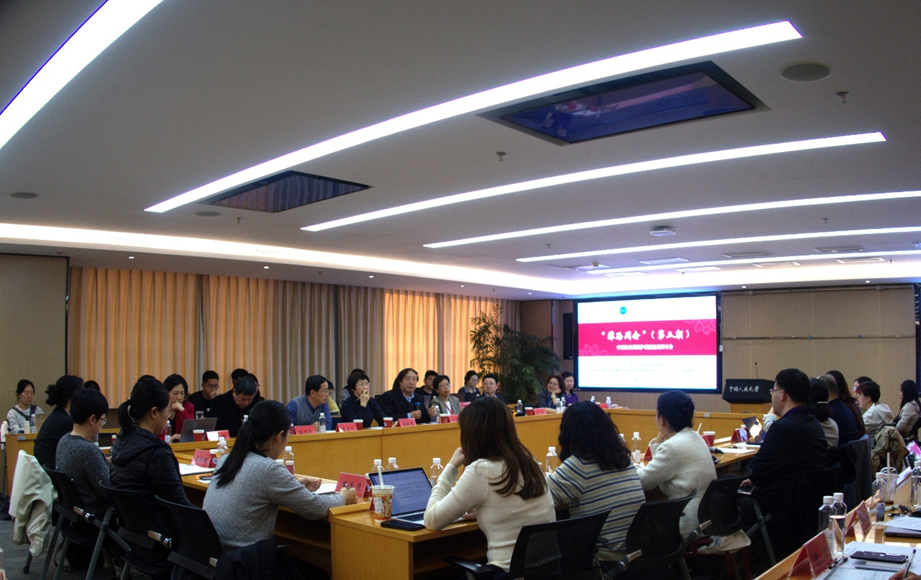
On March 25, 2026, the General Office of the Communist Party of China Central Committee and the General Office of the State Council issued the Guidelines on Accelerating the Establishment of a Long-Term Care Insurance System, marking the transition of the long-term care insurance system from localized pilot programs to nationwide implementation. On March 31, the third “TANSI Weekly Forum”, titled Seminar on the Development of China’s Long-Term Care System, was held. The event was hosted by the National Academy of Development and Strategy at Renmin University of China, and organized by the Long-Term Care Insurance Research Center of China Institute of Health and the School of Population and Health at Renmin University of China. Closely following the policy release, the forum promptly conducted a dedicated thematic discussion.
The conference specially invited several experts to deliver keynote speeches, including WANG Zongfan, Director and Research Fellow of the Medical Insurance and Care Security Research Office at the Chinese Academy of Labor and Social Security; ZHANG Wenjuan, Professor at the School of Population and Health and Deputy Director of China Institute of Health at Renmin University of China; and CHEN He, Associate Professor at the Institute of Social Security, School of Public Administration and Policy, Renmin University of China. Participants in the discussion session included WANG Xiaojun, Professor at the School of Statistics and Director of National Survey Research Center at Renmin University of China; LU Jiehua, Professor at the School of Population and Health, WU Yuzhang Distinguished Professor at Renmin University of China, and Vice President of the China Association of Gerontology and Geriatrics; LI Zhen, Professor at the School of Public Administration and Policy and Director of the Health Security Research Center at Renmin University of China; ZHANG Yinghua, Associate Professor at the School of Government, University of Chinese Academy of Social Sciences, and Associate Research Fellow at the Institute of Chinese Modernization Studies, Chinese Academy of Social Sciences; HU Hongwei, Professor at the School of Public Administration and Policy and Executive Director of the Health Security Research Center at Renmin University of China; and SUN Juanjuan, Professor at the School of Population and Health, Renmin University of China.
DU Peng, former Vice President of Renmin University of China, Dean of the School of Population and Health, Director of China Institute of Health, and Director of the Institute of Gerontology, delivered concluding remarks. The event was attended by WANG Wei, Deputy Dean of the National Academy of Development and Strategy at Renmin University of China, along with nearly 100 experts, scholars, and faculty and students from both inside and outside the university. The conference was co-chaired by SONG Yueping, Party Secretary and Deputy Dean of the School of Population and Health at Renmin University of China, and ZHANG Wenjuan, Deputy Director of China Institute of Health at Renmin University of China.
At the beginning of the conference, Professor SONG Yueping noted in her opening remarks that China’s population aging process is accelerating, and care provision has become a critical issue affecting the well-being of hundreds of millions of families. Urgent questions such as “who will provide care, how care will be delivered, and who will bear the cost” remain to be addressed. With the recent policy advancements in the development of the long-term care insurance system, this symposium was convened in this context, carrying clear practical significance and policy relevance.
WANG Zongfan delivered a keynote report titled “Long-Term Care Insurance System: From Pilot Exploration to Comprehensive Establishment”. From the perspective of institutional evolution, he reviewed the development of China’s long-term care insurance system—from local experimentation to national pilot programs and ultimately toward comprehensive establishment. He noted that deepening population aging, rising risks of disability among the elderly, the weakening of family-based care functions, and issues such as prolonged hospitalization within the medical insurance system together form the practical background for the development of long-term care insurance. Local pilot programs have gradually clarified the system’s distinct positioning compared with medical insurance, focusing on providing institutional security for basic daily care and related nursing needs of people with disabilities. On this basis, a national pathway has taken shape, featuring the expansion of pilot programs, policy standardization, and comprehensive promotion. He also analyzed future policy frameworks and practical directions, particularly in areas such as financing, benefits, administrative management, and coordination with care service systems.
Professor ZHANG Wenjuan presented a report titled “Estimating Human Resource Needs for the Long-Term Care Service System”. She analyzed both the supply and demand of human resources within the long-term care service system, pointing out that under the dual pressures of deepening population aging, rising disability risks, and tightening labor supply among the working-age population, the sector is facing increasingly severe labor shortages. The report examined the current supply-demand situation in both institutional care and care based on home and community, and projected the scale of care workforce demand from 2020 to 2035. She noted that China’s long-term care workforce is currently characterized by a predominance of women and a relatively older age structure. Looking ahead, as the number of people with disabilities continues to grow, demand for care workers will keep rising, and the care gap is likely to persist over the long term, with a risk of further expansion. In response, she proposed policy recommendations focusing on workforce development and improvements in service capacity.
Associate Professor CHEN He delivered a report titled “The Current Status, Achievements, and Reflections on China’s Multi-level Long-Term Care Security System”. From the perspective of institutional development, she reviewed the current status and phased achievements of China’s multi-level long-term care security system. In recent years, the system has taken initial shape, with expanding coverage, continuously improving benefit protection, and increasingly improving supporting measures and service systems. The application of digital technologies has also deepened, providing new support for system implementation and service delivery. However, overall, the development of the multi-level system still faces several prominent challenges, including difficulties in policy coordination across multiple departments, lack of consistency in disability assessment tools, significant disparities in benefits across regions and between urban and rural areas, and the still limited supplementary role of commercial long-term care insurance. In response, she offered policy suggestions on system integration, coordination across multiple tiers of security, and future optimization directions.
During the discussion session, experts and scholars from various fields engaged in in-depth exchanges on key and challenging issues in the development of the long-term care system.
Professor WANG Xiaojun noted that the stable operation and sustainable development of the long-term care insurance system depend on accurately understanding the scale of the disabled population, transitions in disability status, changes in disability rates, and trends in service pricing. At present, system estimation still faces challenges such as insufficient basic data and inadequate data linkage. In the future, factors such as longevity risk, graded care needs, artificial intelligence substitution, and rising care costs should be incorporated into comprehensive analysis.
Professor LU Jiehua emphasized that the transition of long-term care insurance from local pilots to nationwide implementation represents an important institutional step in actively addressing population aging. The next stage should not only expand the system from “points” to “full coverage,” but also improve it from “having” to “being well-developed”. Particular attention should be paid to implementation in rural areas, workforce development, and more precise responses to the needs of populations across regions and varying levels of disability.
Professor LI Zhen pointed out that improving the long-term care system requires prudent assessment of the scale of disabled and cognitively impaired populations, data quality, and institutional boundaries. Looking ahead, it is necessary to consider longevity, health improvements, and technological progress, while also accounting for differences across data sources. At the same time, China’s family culture and caregiving traditions should be incorporated, balancing individual affordability, financial equity, and system sustainability.
Associate Research Fellow ZHANG Yinghua discussed the necessity, institutional form, and future development of the system. She noted that, amid deepening population aging and continued progress in social welfare development, establishing a long-term care insurance system is a practical necessity. However, its long-term sustainability depends on further improvements in financing mechanisms, care pricing, service supply structures, and support for home-based care.
Professor HU Hongwei emphasized that building the long-term care insurance system requires not only attention to institutional design itself, but also coordination with related systems such as medical insurance, civil affairs, and public finance. He pointed out that both the supply and demand sides of the current long-term care system remain relatively weak. Future efforts should focus on optimizing internal fund allocation, coordinating public and social resources, and addressing issues of fairness in system operation. Long-term optimization should also align with the broader goal of advancing the Healthy China initiative, as promoting healthy aging is the fundamental strategy for alleviating care burdens.
Professor Sun Juanjuan noted that securing insurance funding is only the starting point of long-term care system development. More importantly, the system must translate into broader coverage, greater accessibility, and more reliable quality of care services as it expands. Greater attention should be paid to estimating service demand, evaluating service quality, strengthening support systems based on home and family, and examining the impact of artificial intelligence on care models.
During the open discussion, participants focused on the concept that “prevention is better than care”, exploring how to shift the policy focus forward through institutional design and health governance so that more people can receive effective support before disability occurs. In response, experts emphasized that long-term care system development should not only focus on security after disability, but also place greater emphasis on health promotion, functional maintenance, and early intervention. By improving a full life-cycle health security system, better integration between risk prevention and care support can be achieved.
Professor DU Peng delivered the concluding remarks. He noted that the conference conducted in-depth discussions around several key questions, including “whether a long-term care insurance system should be established”, “how to establish such a system”, and “how to ensure its effective implementation”. Drawing on perspectives from different disciplines, the discussions provided important insights for optimizing and improving China’s long-term care system. The establishment of a long-term care insurance system is highly innovative and an important manifestation of the continuous improvement of China’s social security system. At the same time, it is a highly comprehensive institutional arrangement, whose effective operation depends on the development of a professional workforce and the support of a robust care service system.
Looking ahead, he emphasized that the development of the long-term care system should be incorporated into a broader life-cycle perspective of healthy aging, with greater attention paid to health screenings, early interventions, and the prevention or delay of disability. It is also necessary to address practical challenges in areas such as assessment mechanisms, institutional coordination, the application of artificial intelligence, the delineation of responsibilities, and the implementation of services. He further pointed out that the use of funds within the long-term care insurance system is not only a matter of security expenditures, but also has the potential to stimulate the development of the care economy and further promote the growth of the “silver economy”.
This “TANSI Weekly Forum” focused on the development of China’s long-term care system, a topic of significant strategic importance and urgent practical relevance. It facilitated systematic and in-depth discussions on core issues such as institutional design, workforce support, and multi-level security. The seminar further consolidated academic consensus on the improvement of the long-term care insurance system and the construction of long-term care service system. It also provided valuable theoretical support and policy references for advancing high-quality development of China’s long-term care system in this new stage.
Proofreaders: WANG Wei, ZHANG Wenjuan
Translator: ZHANG Yuqing
Web Editor: ZHANG Jingjing
Introduction to the Innovation Hub
China Institute of Health at Renmin University of China was established in 2024 and is one of the interdisciplinary innovation highlands of Renmin University of China. The center adheres to the core concepts of “academic leadership, practical innovation, and international collaboration”, focusing on the macro strategy, institutional system, and policy innovation of “Healthy China”. It widely integrates multi-disciplinary forces both inside and outside the university to form cross-disciplinary research teams, builds a national research center in the field of “Healthy China”, and exchanges practical experiences and innovative measures of “Healthy China” with the world. In 2025, China Institute of Health established the Long-Term Care Insurance Research Center, focusing on four core directions: long-term care insurance system design, long-term care needs assessment, long-term care service management, and long-term care insurance operation management. It aims to build a think tank hub, talent cultivation highland, and industry resource aggregation center that promotes the construction of China’s long-term care security system, providing systematic solutions and intellectual support for implementing the national strategy of proactively responding to population aging and promoting the construction of a Healthy China.
About TANSI Weekly Forum
The “TANSI Weekly Forum” is a high-level interdisciplinary discussion platform established by the National Academy of Development and Strategy at Renmin University of China. Focusing on frontier academic and policy issues, the forum brings together the intellectual strengths of the university’s innovation hubs as well as leading scholars and policy experts across sectors. Through in-depth exchanges and discussions, the forum aims to produce high-quality think tank achievements characterized by strategic vision, contemporary relevance, and intellectual depth. It serves as an important platform for advancing knowledge innovation, theoretical innovation, and policy innovation, while promoting the mutually reinforcing relationships between academic disciplines, policy consultation, and think tank development.