 Research Reports
20
March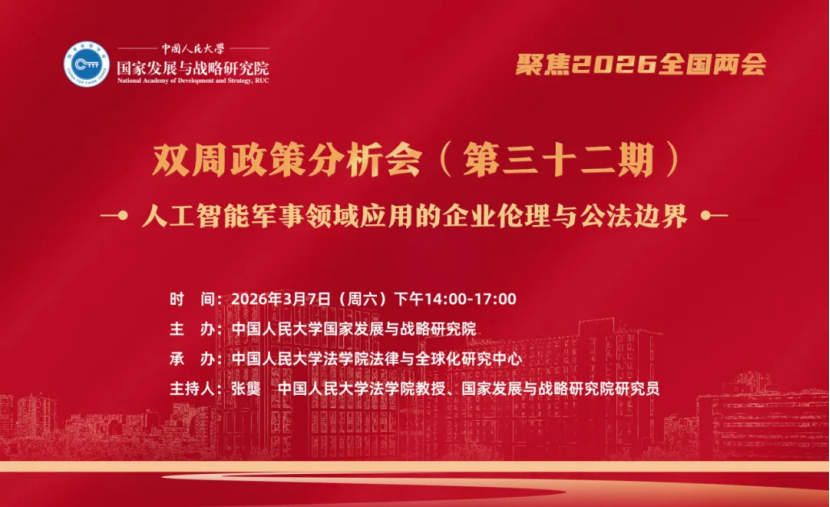
Against the backdrop of the recent US–Iran conflict, the dispute between the Trump administration and Anthropic over AI technology procurement has sparked a series of strategic, legal, and ethical debates regarding the militarization of artificial intelligence (AI). This incident also offers warnings and lessons for China. The application of AI in the military domain has fundamentally transformed traditional forms of warfare, with AI-assisted precision strikes in the US–Iran conflict serving as a clear example. Since Trump’s first term, the US military’s AI strategy has evolved from maintaining a “leadership position” to establishing a goal of “global monopoly”.
Within this context, Anthropic’s refusal to sign contracts on ethical grounds has been regarded as an act of “corporate civil disobedience.” However, experts generally agree that individual corporate ethics are insufficient to resist state-driven militarization. The US military can bypass such resistance by switching suppliers, potentially creating a “dual loss-of-control” risk in AI militarization: first, the expansion of presidential power undermines domestic checks and balances; second, the purely rational logic of AI systems may inadvertently escalate conflicts, triggering humanitarian disasters.
For China, experts recommend strengthening AI talent management and national requisition regulations, while also developing negative lists for relevant enterprises from the perspective of global supply chain compliance. In addition, active participation in shaping international governance rules for AI in warfare is advised to address the new challenges arising from the deep interconnection of technology, capital, and politics.
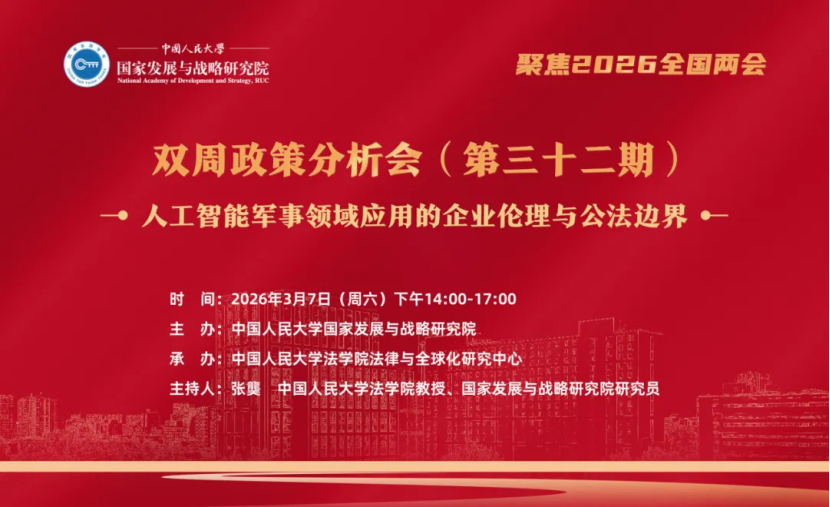
(The above views are compiled from the statements made by participants at the 32th Biweekly Policy Analysis Meeting. It is intended solely for academic exchange and does not represent the views of the National Academy of Development and Strategy, Renmin University of China.)
Proofreaders: ZHANG Yan, ZOU Jingxian
Translator: ZHANG Yuqing
Web Editor: ZHANG Jingjing, ZHANG Yuqing